


Category: gambling
Postal worker hits jackpot with Monopoly poem

Alastair Pildrow, a postal worker from the UK, wrote a 75-word poem about the classic board game Monopoly. He won £20,000.
The poem was submitted to a competition held by Monopoly manufacturer Hasbro in celebration of the game’s 75th anniversary. Hundreds of entries were considered from around the world, and after narrowing things down to a shortlist of 75 entries, Pildrow’s poem was picked as the best.
Pildrow intends to invest most of his winnings, but is also considering putting some of it towards a new house in his home of Haslemere, UK. The 42-year-old works for the Royal Mail, and has long been a fan of Monopoly.
Writing poetry is not the only way to hit the jackpot playing Monopoly. Fast food chain McDonald’s gives out millions in cash and prizes each year through its Monopoly-themed stamp collecting game.
Casino game software producer WagerWorks has also licensed the Monopoly brand from Hasbro, and used it to create an online slot game called MegaJackpots Monopoly. It is a progressive jackpot slot, which means that its jackpot increases with every wager placed until it is won. It is currently the largest progressive jackpot prize available at any online casino, ringing in at an impressive $2.8 million.
The game of Monopoly has always been about all money, but somehow it’s just a little more exciting when there is real cash involved!


- Sportsbook / Casino / Poker Room
- One account for all gambling
- Robust casino software
- Variety of progressive jackpots
- Large poker network
- Many sports betting options
Alastair Pildrow, a postal worker from the UK, wrote a 75-word poem about the classic board game Monopoly. He won £20,000.
The poem was submitted to a competition held by Monopoly manufacturer Hasbro in celebration of the game’s 75th anniversary. Hundreds of entries were considered from around the world, and after narrowing things down to a shortlist of 75 entries, Pildrow’s poem was picked as the best.
Pildrow intends to invest most of his winnings, but is also considering putting some of it towards a new house in his home of Haslemere, UK. The 42-year-old works for the Royal Mail, and has long been a fan of Monopoly.
Writing poetry is not the only way to hit the jackpot playing Monopoly. Fast food chain McDonald’s gives out millions in cash and prizes each year through its Monopoly-themed stamp collecting game.
Casino game software producer WagerWorks has also licensed the Monopoly brand from Hasbro, and used it to create an online slot game called MegaJackpots Monopoly. It is a progressive jackpot slot, which means that its jackpot increases with every wager placed until it is won. It is currently the largest progressive jackpot prize available at any online casino, ringing in at an impressive $2.8 million.
The game of Monopoly has always been about all money, but somehow it’s just a little more exciting when there is real cash involved!
- Sportsbook / Casino / Poker Room
- One account for all gambling
- Robust casino software
- Variety of progressive jackpots
- Large poker network
- Many sports betting options
Georgia’s “Operation Jackpot” is not as cool as it sounds

Early this week, authorities in the US state of Georgia launched a campaign called “Operation Jackpot”. While this sounds like a lucrative gambling opportunity, the truth is not quite as nice, for it is the code name of a series of raids against illegal gambling operations.
The sting is the result of a three month investigation, and involved 150 FBI agents, US Marshals and Immigration Customs Enforcement officers.
The target of the raids is a series of illegal gambling houses. Police have seized hundreds of gambling machines and thousands of dollars in cash. Fifteen people have been arrested since the raids began a few days ago. A slot machine manufacturing company called All Star was also raided, and its owner was among those arrested.
“We stumbled on a pretty major organization,” explained Sheriff Kem Kimbrough. “Turns out these operations are supported by a company that manufactures gambling devices out in Rockdale County. What makes them illegal is the fact that they are utilized with cash payouts.”
Those arrested will face charges related to the manufacturing and possession of gambling devices.
- Sportsbook / Casino / Poker Room
- One account for all gambling
- Robust casino software
- Variety of progressive jackpots
- Large poker network
- Many sports betting options
Early this week, authorities in the US state of Georgia launched a campaign called “Operation Jackpot”. While this sounds like a lucrative gambling opportunity, the truth is not quite as nice, for it is the code name of a series of raids against illegal gambling operations.
The sting is the result of a three month investigation, and involved 150 FBI agents, US Marshals and Immigration Customs Enforcement officers.
The target of the raids is a series of illegal gambling houses. Police have seized hundreds of gambling machines and thousands of dollars in cash. Fifteen people have been arrested since the raids began a few days ago. A slot machine manufacturing company called All Star was also raided, and its owner was among those arrested.
“We stumbled on a pretty major organization,” explained Sheriff Kem Kimbrough. “Turns out these operations are supported by a company that manufactures gambling devices out in Rockdale County. What makes them illegal is the fact that they are utilized with cash payouts.”
Those arrested will face charges related to the manufacturing and possession of gambling devices.
- Sportsbook / Casino / Poker Room
- One account for all gambling
- Robust casino software
- Variety of progressive jackpots
- Large poker network
- Many sports betting options
Gambling Pigeons Go for the Jackpot

A new study has revealed that pigeons are natural gamblers. While they won’t be hitting the slots or betting bread crumbs at poker tables any time soon, they do tend to go for lower odds if the payout is high enough.
Psychologists at the University of Kentucky tested the birds with a simple machine that had two buttons. One was marked with a vertical line, and it paid out 10 pellets 20% of the time. The other button, marked with a horizontal line, rewarded with 3 pellets every time.
Six out of the eight pigeons tested pecked the vertical line most of the time, indicating a natural urge to go for the big jackpot, even though the horizontal line paid out more pellets in the long run. The lure of the jackpot was more appealing to the birds than a safe bet.
According to the psychologists, “The results of these experiments suggest that pigeons show a tendency to make maladaptive decisions similar to those of humans. That is, pigeons prefer a signal for a low probability, high payoff alternative over a signal for a certain low payoff alternative that on average provides 50% more reinforcement.”
Studying gambling behavior in pigeons may help the researchers better understand gambling behavior in people. “There’s a basic behavioral, biological process involved that probably affects many different species, and it doesn’t require the excitement of a casino,” said the researchers.
- Sportsbook / Casino / Poker Room
- One account for all gambling
- Robust casino software
- Variety of progressive jackpots
- Large poker network
- Many sports betting options
A new study has revealed that pigeons are natural gamblers. While they won’t be hitting the slots or betting bread crumbs at poker tables any time soon, they do tend to go for lower odds if the payout is high enough.
Psychologists at the University of Kentucky tested the birds with a simple machine that had two buttons. One was marked with a vertical line, and it paid out 10 pellets 20% of the time. The other button, marked with a horizontal line, rewarded with 3 pellets every time.
Six out of the eight pigeons tested pecked the vertical line most of the time, indicating a natural urge to go for the big jackpot, even though the horizontal line paid out more pellets in the long run. The lure of the jackpot was more appealing to the birds than a safe bet.
According to the psychologists, “The results of these experiments suggest that pigeons show a tendency to make maladaptive decisions similar to those of humans. That is, pigeons prefer a signal for a low probability, high payoff alternative over a signal for a certain low payoff alternative that on average provides 50% more reinforcement.”
Studying gambling behavior in pigeons may help the researchers better understand gambling behavior in people. “There’s a basic behavioral, biological process involved that probably affects many different species, and it doesn’t require the excitement of a casino,” said the researchers.
- Sportsbook / Casino / Poker Room
- One account for all gambling
- Robust casino software
- Variety of progressive jackpots
- Large poker network
- Many sports betting options
Halo may rule now, but next Call of Duty has gambling

Microsoft may be setting new records with its “Halo: Reach” and “Halo 3,” but competitor Activision will be launching its “Call of Duty: Black Ops” on November 9 with a feature that no Halo game can touch: Gambling against other players to improve your character’s potential.
Halo: Reach pulled in a ridiculous $200 million in sales on its first day of release and vaulted to the upper reaches of Xbox Live activity stats as well. Though “Call of Duty: Modern Warfare 2” stayed in the #1 most popular spot last week, “Halo: Reach” will surely be this week’s top game, as numbers show that it has been the most popular game on the network for seven days running. Incidentally, the three-year-old Halo 3 was third-favorite on the Xbox Live chart.
However, while the “Halo” series is getting a bit chastised among games for a continued lack of originality, Call of Duty: Black Ops is set to innovative perhaps the whole genre with its “gamble” feature.
In Black Ops’ “wager matches,” players will be able to compete against one another in four unique arenas. The players agree upon the stakes and the winner earns “Call of Duty Points,” which may be used to upgrade your character for use in other games.
Though not actually employing real money, one can easily imagine other games incorporating cash bets into their software. Madden for money, anyone…?
- Sportsbook / Casino / Poker Room
- One account for all gambling
- Robust casino software
- Variety of progressive jackpots
- Large poker network
- Many sports betting options
Microsoft may be setting new records with its “Halo: Reach” and “Halo 3,” but competitor Activision will be launching its “Call of Duty: Black Ops” on November 9 with a feature that no Halo game can touch: Gambling against other players to improve your character’s potential.
Halo: Reach pulled in a ridiculous $200 million in sales on its first day of release and vaulted to the upper reaches of Xbox Live activity stats as well. Though “Call of Duty: Modern Warfare 2” stayed in the #1 most popular spot last week, “Halo: Reach” will surely be this week’s top game, as numbers show that it has been the most popular game on the network for seven days running. Incidentally, the three-year-old Halo 3 was third-favorite on the Xbox Live chart.
However, while the “Halo” series is getting a bit chastised among games for a continued lack of originality, Call of Duty: Black Ops is set to innovative perhaps the whole genre with its “gamble” feature.
In Black Ops’ “wager matches,” players will be able to compete against one another in four unique arenas. The players agree upon the stakes and the winner earns “Call of Duty Points,” which may be used to upgrade your character for use in other games.
Though not actually employing real money, one can easily imagine other games incorporating cash bets into their software. Madden for money, anyone…?
- Sportsbook / Casino / Poker Room
- One account for all gambling
- Robust casino software
- Variety of progressive jackpots
- Large poker network
- Many sports betting options
Accused of money-laundering, high-roller says “$29,000 nothing to me”

When do you lose $500,000 yet still come out a winner? When your freedom is an issue in a court case in Australia, it seems.
In last week’s top gambling news story from Down Under, Wollstonecraft citizen Zheng Tan was facing trial for money laundering in an Australian district court. The specific incident involved a stolen check for AU $500,000 (about US $472,000) which Tan said was the repayment of an informal loan he’d made to a fellow high-roller in the Crown Casino’s VIP room.
Tan first lent the man AU $120,000, to which the thankful loanee offered his $300,000 Philippe Patek watch. When Tan later topped up his new friend with another AU $350,000, the man offered an IOU based on real estate in China.
A short time later, Tan’s friend made good on his promise and wrote Tan a check for the AU $500,000 – about AU $29,000 (US $27,400) more than what had been leant; the outstanding amount was argued by prosecuting attorneys to have been a fee for laundering the money. He then cashed the check and took the money to play with in Canberra – unfortunately, that money was reportedly stolen from his car.
Tan argued in court that he didn’t know the check was stolen and that he’d gambled away some $10 million at the Crown Casino alone. “$29,000 is nothing to me,” he said.
Tan was exonerated of the charges.
- Sportsbook / Casino / Poker Room
- One account for all gambling
- Robust casino software
- Variety of progressive jackpots
- Large poker network
- Many sports betting options
When do you lose $500,000 yet still come out a winner? When your freedom is an issue in a court case in Australia, it seems.
In last week’s top gambling news story from Down Under, Wollstonecraft citizen Zheng Tan was facing trial for money laundering in an Australian district court. The specific incident involved a stolen check for AU $500,000 (about US $472,000) which Tan said was the repayment of an informal loan he’d made to a fellow high-roller in the Crown Casino’s VIP room.
Tan first lent the man AU $120,000, to which the thankful loanee offered his $300,000 Philippe Patek watch. When Tan later topped up his new friend with another AU $350,000, the man offered an IOU based on real estate in China.
A short time later, Tan’s friend made good on his promise and wrote Tan a check for the AU $500,000 – about AU $29,000 (US $27,400) more than what had been leant; the outstanding amount was argued by prosecuting attorneys to have been a fee for laundering the money. He then cashed the check and took the money to play with in Canberra – unfortunately, that money was reportedly stolen from his car.
Tan argued in court that he didn’t know the check was stolen and that he’d gambled away some $10 million at the Crown Casino alone. “$29,000 is nothing to me,” he said.
Tan was exonerated of the charges.
- Sportsbook / Casino / Poker Room
- One account for all gambling
- Robust casino software
- Variety of progressive jackpots
- Large poker network
- Many sports betting options
Biggest jackpot win ever? Michigan resident wins $775,338 … in a raffle

Typically on the pages of Gambling Results, you’ll see six-figure winners in slots and state lotteries all the time – but winning $775,338 in a *raffle*? That’s newsworthy!
The lucky winner of this surely record-breaking raffle in Michigan, so far identified publicly only as “Santo,” was the beneficiary of a simple local promotion that essentially “went viral” to run through 49 weeks and sell a crazy 238,000 tickets in seven days alone.
The holder of quite possibly the world’s biggest raffle pool ever was the Carleton Rotary Club of Carleton, Michigan. Beginning nearly one year ago, all the club sought to do was raise a little money by holding a “Jack of Spades raffle.” The idea was that one winning ticket was drawn each week and the ticket-holder rewarded with a prize; the winner could then draw from a deck of 52 cards plus jokers to increase the prize. The jack of spades was designated as the jackpot card – a card it took 49 weeks to draw. (Talk about your progressive jackpots…
By the time the 49th and final draw was made on Friday night, lines formed at the Grafton Inn Sports Bar & Grill – where the raffle had been held weekly – to buy tickets hours before the establishment opened.
- Sportsbook / Casino / Poker Room
- One account for all gambling
- Robust casino software
- Variety of progressive jackpots
- Large poker network
- Many sports betting options
Typically on the pages of Gambling Results, you’ll see six-figure winners in slots and state lotteries all the time – but winning $775,338 in a *raffle*? That’s newsworthy!
The lucky winner of this surely record-breaking raffle in Michigan, so far identified publicly only as “Santo,” was the beneficiary of a simple local promotion that essentially “went viral” to run through 49 weeks and sell a crazy 238,000 tickets in seven days alone.
The holder of quite possibly the world’s biggest raffle pool ever was the Carleton Rotary Club of Carleton, Michigan. Beginning nearly one year ago, all the club sought to do was raise a little money by holding a “Jack of Spades raffle.” The idea was that one winning ticket was drawn each week and the ticket-holder rewarded with a prize; the winner could then draw from a deck of 52 cards plus jokers to increase the prize. The jack of spades was designated as the jackpot card – a card it took 49 weeks to draw. (Talk about your progressive jackpots…
By the time the 49th and final draw was made on Friday night, lines formed at the Grafton Inn Sports Bar & Grill – where the raffle had been held weekly – to buy tickets hours before the establishment opened.
- Sportsbook / Casino / Poker Room
- One account for all gambling
- Robust casino software
- Variety of progressive jackpots
- Large poker network
- Many sports betting options
Dream of financial independence comes true for South African lottery winner
In what South African National Lottery spokeswoman Thembi Tulwana is calling “another dream come true,” a 66-year-old man from Gauteng province has been awarded Saturday’s grand prize ZAR 10 million (about $1.38 million).
When claiming the prize, the man thought he had won a “second-division prize” in the lottery worth just under $15,000. Instead he found out he actually one the big one when rechecking the numbers. His reaction: “Unable to contain his disbelief, he broke down and cried hysterically,” according to representatives of Gidani, the Greece-based company running the lottery.
They went on to state that “He then called his wife of 43 years, whom he trusts entirely, to share the news.”
Though on the face of it, the grand prize doesn’t seem that huge, it’s quite an amazing windfall in a country where, as Wikipedia informs, “The median annual income of Black working adults aged 15-65 is ZAR 12,073 [$1,665].”
Once the man composed himself a bit, he told lottery officials that this prize meant financial independence, plus the opportunity to buy property for himself and his family’s caretaker, and possibly travel. “We will now be able to do things sooner rather than having to wait until we can afford to buy what we like,” he said.
The South African National Lottery started in 2000 and is today overwhelmingly the most popular form of gambling in the country: A study by the National Centre for the Study of Gambling in 2006 showed that 82% of citizens played the lottery and 53% did no other form of gambling.
- Sportsbook / Casino / Poker Room
- One account for all gambling
- Robust casino software
- Variety of progressive jackpots
- Large poker network
- Many sports betting options
In what South African National Lottery spokeswoman Thembi Tulwana is calling “another dream come true,” a 66-year-old man from Gauteng province has been awarded Saturday’s grand prize ZAR 10 million (about $1.38 million).
When claiming the prize, the man thought he had won a “second-division prize” in the lottery worth just under $15,000. Instead he found out he actually one the big one when rechecking the numbers. His reaction: “Unable to contain his disbelief, he broke down and cried hysterically,” according to representatives of Gidani, the Greece-based company running the lottery.
They went on to state that “He then called his wife of 43 years, whom he trusts entirely, to share the news.”
Though on the face of it, the grand prize doesn’t seem that huge, it’s quite an amazing windfall in a country where, as Wikipedia informs, “The median annual income of Black working adults aged 15-65 is ZAR 12,073 [$1,665].”
Once the man composed himself a bit, he told lottery officials that this prize meant financial independence, plus the opportunity to buy property for himself and his family’s caretaker, and possibly travel. “We will now be able to do things sooner rather than having to wait until we can afford to buy what we like,” he said.
The South African National Lottery started in 2000 and is today overwhelmingly the most popular form of gambling in the country: A study by the National Centre for the Study of Gambling in 2006 showed that 82% of citizens played the lottery and 53% did no other form of gambling.
- Sportsbook / Casino / Poker Room
- One account for all gambling
- Robust casino software
- Variety of progressive jackpots
- Large poker network
- Many sports betting options
Florida woman gets affairs in order, collects nearly $39 million in Powerball win
When people talk about “life-changing” multi-million prizes in lottery draws, they’re definitely visualizing Elizabeth’s Choras-Hanna’s win of the Powerball Jackpot Prize in July.
Thirty-five year-old Choras-Hanna, who is currently an unemployed medical assistant, will presumably be toning down the job search a bit after claiming her $73.8 million win on Friday. Residing in Hollywood, Florida, Choras-Hanna becomes the state’s second-ever Powerball winner. Opting for a one-time payment rather than installments, Choras-Hanna collected $38,929,055.11 for the winning ticket.
The winning numbers were 20, 21, 27, 28, 56 and Powerball number 4.
“[My sister and I] always go grocery shopping at Publix together, and before we leave we buy one Florida Lotto and one Powerball Quick Pick ticket,” Choras-Hanna said. “The next day, I went to another Publix and had them check my tickets and discovered our ticket was the jackpot winner.”
Choras-Hanna will be sharing the winnings with her sister and her sister’s husband. Though the draw was actually held on July 10, Choras-Hanna said she waited to collect the prize while she and her family “got their affairs in order first.”
In last Friday’s draw, a single winner from Louisiana bought a ticket with a progressive jackpot worth $85.7 million; this winner has yet to claim the prize. The winning numbers were 1, 16, 17, 41, 57 and Powerball 15.
- Sportsbook / Casino / Poker Room
- One account for all gambling
- Robust casino software
- Variety of progressive jackpots
- Large poker network
- Many sports betting options
When people talk about “life-changing” multi-million prizes in lottery draws, they’re definitely visualizing Elizabeth’s Choras-Hanna’s win of the Powerball Jackpot Prize in July.
Thirty-five year-old Choras-Hanna, who is currently an unemployed medical assistant, will presumably be toning down the job search a bit after claiming her $73.8 million win on Friday. Residing in Hollywood, Florida, Choras-Hanna becomes the state’s second-ever Powerball winner. Opting for a one-time payment rather than installments, Choras-Hanna collected $38,929,055.11 for the winning ticket.
The winning numbers were 20, 21, 27, 28, 56 and Powerball number 4.
“[My sister and I] always go grocery shopping at Publix together, and before we leave we buy one Florida Lotto and one Powerball Quick Pick ticket,” Choras-Hanna said. “The next day, I went to another Publix and had them check my tickets and discovered our ticket was the jackpot winner.”
Choras-Hanna will be sharing the winnings with her sister and her sister’s husband. Though the draw was actually held on July 10, Choras-Hanna said she waited to collect the prize while she and her family “got their affairs in order first.”
In last Friday’s draw, a single winner from Louisiana bought a ticket with a progressive jackpot worth $85.7 million; this winner has yet to claim the prize. The winning numbers were 1, 16, 17, 41, 57 and Powerball 15.
- Sportsbook / Casino / Poker Room
- One account for all gambling
- Robust casino software
- Variety of progressive jackpots
- Large poker network
- Many sports betting options
Man learns he wins £7.7 million in U.K. lottery, returns to work within an hour
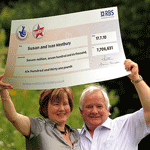
Imagine you just won a £7.7 million ($11.7 million) in a national lottery. What would be the first thing you did? Surely a minority would answer, “Immediately get back to work,” but that’s precisely what Ivan Westbury did after receiving the life-changing news last Sunday.
Westbury’s wife of 21 years, Susan, was at a local Tesco checking on her lottery ticket. Susan attracted a bit of attention as she had the ticket scanned by a cashier, who informed her they’d have to call the lottery commission for more information. The information imparted was that, yes, the Westburys had won £7,706,631 in the U.K. lottery – at which, Susan said, “I nearly passed out.”
Susan called her husband, who joined her at the store after leaving his lightning-protection business. The two whooped it up for a bit, but within the hour Ivan was back at work. In explaining his actions, the self-professed workaholic was quoted as saying, “I’ve got a passion about work […] and I just love what I do. I suppose you could call it sad but I haven’t had a day off for four years.”
The Westburys will now take that vacation, though it was planned before the couple bought the lottery ticket: They’ll be taking a day trip to Cornwall.
In hoping to celebrate their win that evening, the Westburys ironically found that they couldn’t afford to pay for some pub drinks in cash.
The couple has stated that they’ll be doing “normal lottery things” by making a few major purchases in addition to giving their children and grandchildren some money – and they’ll be leaving the business open.
- Sportsbook / Casino / Poker Room
- One account for all gambling
- Robust casino software
- Variety of progressive jackpots
- Large poker network
- Many sports betting options
Imagine you just won a £7.7 million ($11.7 million) in a national lottery. What would be the first thing you did? Surely a minority would answer, “Immediately get back to work,” but that’s precisely what Ivan Westbury did after receiving the life-changing news last Sunday.
Westbury’s wife of 21 years, Susan, was at a local Tesco checking on her lottery ticket. Susan attracted a bit of attention as she had the ticket scanned by a cashier, who informed her they’d have to call the lottery commission for more information. The information imparted was that, yes, the Westburys had won £7,706,631 in the U.K. lottery – at which, Susan said, “I nearly passed out.”
Susan called her husband, who joined her at the store after leaving his lightning-protection business. The two whooped it up for a bit, but within the hour Ivan was back at work. In explaining his actions, the self-professed workaholic was quoted as saying, “I’ve got a passion about work […] and I just love what I do. I suppose you could call it sad but I haven’t had a day off for four years.”
The Westburys will now take that vacation, though it was planned before the couple bought the lottery ticket: They’ll be taking a day trip to Cornwall.
In hoping to celebrate their win that evening, the Westburys ironically found that they couldn’t afford to pay for some pub drinks in cash.
The couple has stated that they’ll be doing “normal lottery things” by making a few major purchases in addition to giving their children and grandchildren some money – and they’ll be leaving the business open.
- Sportsbook / Casino / Poker Room
- One account for all gambling
- Robust casino software
- Variety of progressive jackpots
- Large poker network
- Many sports betting options
Lucky or unlucky? Taiwanese national lottery winner waits 55 days to claim

For most people, winning a nearly $15 million lottery progressive jackpot would be the ultimate sign of good luck – but not a recent record-setting winner in Taiwan. Fearing “she would meet the same sorry fate as [lottery] winners in foreign countries she read about,” a woman in Taipei City waited nearly two months before finally deciding to step forward and claim her prize.
On April 8, a NT$480 million ($14.93 million) jackpot had been accumulated. After the draw, the Taiwan Lottery commission announced that a single winner in Taipei City had taken the big prize. But at home, that ticket buyer was simply in shock.
According to the Taiwanese official news agency, the winner’s “mind went blank for more than ten minutes after learning that she had won.” She could not sleep the night after finding out the news and in following days read a number of stories about multi-million dollar lottery winners going broke or meeting terrible fates after their jackpot wins.
Ultimately, the woman and her husband decided to claim the money after all – At 55 days past the draw, this was easily the Taiwanese record for the longest such period of time. After taxes, the prize will be worth about $11.95 million. The couple also stated that they would immediately be donating NT$1 million ($31,100) to charity.
- Sportsbook / Casino / Poker Room
- One account for all gambling
- Robust casino software
- Variety of progressive jackpots
- Large poker network
- Many sports betting options
For most people, winning a nearly $15 million lottery progressive jackpot would be the ultimate sign of good luck – but not a recent record-setting winner in Taiwan. Fearing “she would meet the same sorry fate as [lottery] winners in foreign countries she read about,” a woman in Taipei City waited nearly two months before finally deciding to step forward and claim her prize.
On April 8, a NT$480 million ($14.93 million) jackpot had been accumulated. After the draw, the Taiwan Lottery commission announced that a single winner in Taipei City had taken the big prize. But at home, that ticket buyer was simply in shock.
According to the Taiwanese official news agency, the winner’s “mind went blank for more than ten minutes after learning that she had won.” She could not sleep the night after finding out the news and in following days read a number of stories about multi-million dollar lottery winners going broke or meeting terrible fates after their jackpot wins.
Ultimately, the woman and her husband decided to claim the money after all – At 55 days past the draw, this was easily the Taiwanese record for the longest such period of time. After taxes, the prize will be worth about $11.95 million. The couple also stated that they would immediately be donating NT$1 million ($31,100) to charity.
- Sportsbook / Casino / Poker Room
- One account for all gambling
- Robust casino software
- Variety of progressive jackpots
- Large poker network
- Many sports betting options
Powerball lottery hit for $73.9 million by Florida resident
An unnamed Floridan who purchased a ticket in Royal Palm Beach became the seventh winner of the nationwide Powerball lottery jackpot in 2010 when he or she matched all six numbers drawn to win the $73.9 million grand prize last Saturday.
The winning numbers were 20, 21, 27, 28, 56 and powerball 4, and the winner has 180 days to claim the prize. The Florida Lottery commission announced that the $73.9 million represents the third-large prize ever won in a Florida game and is the second Powerball jackpot awarded to a Floridian.
Since joining the game in January 2009, Florida has recorded more Powerball winners than any other state, paying out over $289 million in prizes to the lucky folks. The Powerball lottery is now played in 42 U.S. states, Washington D.C., and the Virgin Islands.
Three times in 2010, the Powerball jackpot has gone over $200 million; the year’s top winner so far is Chris Shaw of Missouri, who won $258.5 million in April. An unknown winner in Ohio enjoyed a $261.6 million windfall on June 2, while Sandra McNeil of New Jersey scored $211.7 million in March.
Other Powerball progressive jackpots won this year include the $141 million won by Frank Griffin of North Carolina in February; the $96.9 million shared by a pair of friends in Montana and an auto workers’ group in Michigan and Ohio on June 23; and an anonymous player in Arkansas, who won $25 million on January 2.
Powerball closed year 2009 holding onto a $128.6 payout that went unclaimed by whoever purchased the winning ticket in Kentucky.
- Sportsbook / Casino / Poker Room
- One account for all gambling
- Robust casino software
- Variety of progressive jackpots
- Large poker network
- Many sports betting options
An unnamed Floridan who purchased a ticket in Royal Palm Beach became the seventh winner of the nationwide Powerball lottery jackpot in 2010 when he or she matched all six numbers drawn to win the $73.9 million grand prize last Saturday.
The winning numbers were 20, 21, 27, 28, 56 and powerball 4, and the winner has 180 days to claim the prize. The Florida Lottery commission announced that the $73.9 million represents the third-large prize ever won in a Florida game and is the second Powerball jackpot awarded to a Floridian.
Since joining the game in January 2009, Florida has recorded more Powerball winners than any other state, paying out over $289 million in prizes to the lucky folks. The Powerball lottery is now played in 42 U.S. states, Washington D.C., and the Virgin Islands.
Three times in 2010, the Powerball jackpot has gone over $200 million; the year’s top winner so far is Chris Shaw of Missouri, who won $258.5 million in April. An unknown winner in Ohio enjoyed a $261.6 million windfall on June 2, while Sandra McNeil of New Jersey scored $211.7 million in March.
Other Powerball progressive jackpots won this year include the $141 million won by Frank Griffin of North Carolina in February; the $96.9 million shared by a pair of friends in Montana and an auto workers’ group in Michigan and Ohio on June 23; and an anonymous player in Arkansas, who won $25 million on January 2.
Powerball closed year 2009 holding onto a $128.6 payout that went unclaimed by whoever purchased the winning ticket in Kentucky.
- Sportsbook / Casino / Poker Room
- One account for all gambling
- Robust casino software
- Variety of progressive jackpots
- Large poker network
- Many sports betting options
US woman wins 4th multi-million dollar lottery jackpot

One of this week’s top gambling news stories is about a Joan Ginther, a 63 year old Texan who is a very, very lucky woman. Just a few days ago, she spent $50 on a scratch card lottery ticket, and ended up winning a very impressive $10 million jackpot. She was happy, but she might not have been very surprised.
While most lottery players would be grateful to win such a large jackpot, for Ms Ginther, it is becoming a regular occurrence. This recent win is in fact the fourth seven-figure lottery jackpot she has won in the last 20 years.
Her first big win came back in 1993 when she won $5.4 million. After a long break, she won again in 2006, turning a $30 scratchie ticket into $3 million. Two year later, in 2008, Ms Ginther won for the third time, taking another $3 million from a lottery scratch ticket. Her latest win pushes her total lottery jackpot winnings to a massive $20.4 million.
Ms Ginther has not given any interviews, and is shunning the worldwide publicity that her luck has brought her. It is not known how she intends to spend the largest lottery jackpot she has won so far.
Lotteries are popular all around the world, but their prizes are usually limited to a particular state or a particular country. An alternative global jackpot system can be found online. They are called progressive jackpot games, and they can be played at most online casinos.
Progressive jackpots games, like major lotteries, are capable of paying out in the millions. These jackpots grow bigger as more players enjoy the games, since a small portion of each player’s wager is added to the prize. These progressive jackpots are tough to win, but the payouts can be life-changing.
- Sportsbook / Casino / Poker Room
- One account for all gambling
- Robust casino software
- Variety of progressive jackpots
- Large poker network
- Many sports betting options
One of this week’s top gambling news stories is about a Joan Ginther, a 63 year old Texan who is a very, very lucky woman. Just a few days ago, she spent $50 on a scratch card lottery ticket, and ended up winning a very impressive $10 million jackpot. She was happy, but she might not have been very surprised.
While most lottery players would be grateful to win such a large jackpot, for Ms Ginther, it is becoming a regular occurrence. This recent win is in fact the fourth seven-figure lottery jackpot she has won in the last 20 years.
Her first big win came back in 1993 when she won $5.4 million. After a long break, she won again in 2006, turning a $30 scratchie ticket into $3 million. Two year later, in 2008, Ms Ginther won for the third time, taking another $3 million from a lottery scratch ticket. Her latest win pushes her total lottery jackpot winnings to a massive $20.4 million.
Ms Ginther has not given any interviews, and is shunning the worldwide publicity that her luck has brought her. It is not known how she intends to spend the largest lottery jackpot she has won so far.
Lotteries are popular all around the world, but their prizes are usually limited to a particular state or a particular country. An alternative global jackpot system can be found online. They are called progressive jackpot games, and they can be played at most online casinos.
Progressive jackpots games, like major lotteries, are capable of paying out in the millions. These jackpots grow bigger as more players enjoy the games, since a small portion of each player’s wager is added to the prize. These progressive jackpots are tough to win, but the payouts can be life-changing.
- Sportsbook / Casino / Poker Room
- One account for all gambling
- Robust casino software
- Variety of progressive jackpots
- Large poker network
- Many sports betting options
Study “Blackjack in the Kitchen” highlights differences between online and casino gambling
An interesting study printed in 2009 and recently put online at the Journal of Consumer Research website is a report entitled “Blackjack in the Kitchen: Understanding Online versus Casino Gambling.” Written by June Cotte and Kathryn A. Latour of the University of Western Ontario, the findings are the results of a psychological study of 30 gamblers.
Two major points are made in the study: Firstly, like most academics studying the subject ultimately conclude, Internet gambling should be regulated, but the second point was far more interesting and unexpected. Cotte and Latour immediately noted the dramatic diametrical opposition of standard casino and online casino players: Rarely did one type or the other cross over into the other gaming experience.
Both land-based and online casino visitors noted the social element of their preference, namely that visiting a real-life casino is a highly social experience and that Internet gambling is a solitary activity – and both groups cited this difference as the no. 1 reason for their choice.
“Casino gamblers perceive online gambling as bereft of social connections, which was pivotal to the enjoyment of gambling for them,” reads the study in part. “The online gamblers also perceive this lack of social connectedness in virtual gambling. But for them, this aspect is positive; it is one crucial reason the online gamblers gave for their choice to stay home and gamble. Many online gamblers chose the online environment because of the perception of the lack of social connections.”
The study also notes an interesting justification for those of modest budgets to enjoy playing in online gambling sites: “The perceived anonymity of the online environment equalizes gamblers, so that low rollers and high rollers are treated equally. In contrast, in a casino more experienced gamblers who bet larger amounts are treated specially, and some gamblers go to the casino seeking such ego gratification.”
“Blackjack in the Kitchen” is available by subscription only from Chicago Journals.
- Sportsbook / Casino / Poker Room
- One account for all gambling
- Robust casino software
- Variety of progressive jackpots
- Large poker network
- Many sports betting options
An interesting study printed in 2009 and recently put online at the Journal of Consumer Research website is a report entitled “Blackjack in the Kitchen: Understanding Online versus Casino Gambling.” Written by June Cotte and Kathryn A. Latour of the University of Western Ontario, the findings are the results of a psychological study of 30 gamblers.
Two major points are made in the study: Firstly, like most academics studying the subject ultimately conclude, Internet gambling should be regulated, but the second point was far more interesting and unexpected. Cotte and Latour immediately noted the dramatic diametrical opposition of standard casino and online casino players: Rarely did one type or the other cross over into the other gaming experience.
Both land-based and online casino visitors noted the social element of their preference, namely that visiting a real-life casino is a highly social experience and that Internet gambling is a solitary activity – and both groups cited this difference as the no. 1 reason for their choice.
“Casino gamblers perceive online gambling as bereft of social connections, which was pivotal to the enjoyment of gambling for them,” reads the study in part. “The online gamblers also perceive this lack of social connectedness in virtual gambling. But for them, this aspect is positive; it is one crucial reason the online gamblers gave for their choice to stay home and gamble. Many online gamblers chose the online environment because of the perception of the lack of social connections.”
The study also notes an interesting justification for those of modest budgets to enjoy playing in online gambling sites: “The perceived anonymity of the online environment equalizes gamblers, so that low rollers and high rollers are treated equally. In contrast, in a casino more experienced gamblers who bet larger amounts are treated specially, and some gamblers go to the casino seeking such ego gratification.”
“Blackjack in the Kitchen” is available by subscription only from Chicago Journals.
- Sportsbook / Casino / Poker Room
- One account for all gambling
- Robust casino software
- Variety of progressive jackpots
- Large poker network
- Many sports betting options
WSOP host Harrah’s now a lobbying champion for internet gambling

Not so long ago, Harrah’s Entertainment was one of the most vocal detractors of regulating online gambling sites. Today, however, they’re rapidly becoming a force for full legalization of Internet gaming in America. In fact, Harrah’s will be among the most visible pro-online gambling lobbyists in Washington beginning next month.
Harrah’s Entertainment is of course best known for the Las Vegas-based Harrah’s Hotel and Caesar’s Palace, while ever gaining in household name recognition thanks to its sponsorship of the World Series of Poker event. Back in 2006, Harrah’s was a chief player in getting the Unlawful Internet Gambling Enforcement Act, the law which imposes serious restrictions on playing online in the United States, passed as part of the Safe Port Act.
With the economy tanking in 2008 and 2009 while profits steadily eroded, Harrah’s has performed an about-face on their opposition to the gambling online. The first major step was in hiring former Party Gaming CEO Mitch Garber to head up its newly formed “interactive gaming division,” followed by the launching of its own website affiliated with the World Series of Poker – at which U.S. players are not allowed to play.
But last week saw the biggest indication yet that Harrah’s is exuding effort into overturning UIGEA and getting more rational laws regarding online gambling in the U.S. as the company hired the lobbying firm Capitol Counsel to plead the casino giant’s case on Capitol Hill. In 2010, Harrah’s has already spent nearly $1 million in lobbying efforts.
Speculation has it that Harrah’s expanded lobbying efforts are in advance of Congressional hearings scheduled for July on legislation proposed by Rep. Barney Frank that would overturn UIGEA. The Nevada Gaming Control Board is also reportedly investigating the relationship between gaming provider 888 and Harrah’s for possible violations of state and federal law.
- Sportsbook / Casino / Poker Room
- One account for all gambling
- Robust casino software
- Variety of progressive jackpots
- Large poker network
- Many sports betting options
Not so long ago, Harrah’s Entertainment was one of the most vocal detractors of regulating online gambling sites. Today, however, they’re rapidly becoming a force for full legalization of Internet gaming in America. In fact, Harrah’s will be among the most visible pro-online gambling lobbyists in Washington beginning next month.
Harrah’s Entertainment is of course best known for the Las Vegas-based Harrah’s Hotel and Caesar’s Palace, while ever gaining in household name recognition thanks to its sponsorship of the World Series of Poker event. Back in 2006, Harrah’s was a chief player in getting the Unlawful Internet Gambling Enforcement Act, the law which imposes serious restrictions on playing online in the United States, passed as part of the Safe Port Act.
With the economy tanking in 2008 and 2009 while profits steadily eroded, Harrah’s has performed an about-face on their opposition to the gambling online. The first major step was in hiring former Party Gaming CEO Mitch Garber to head up its newly formed “interactive gaming division,” followed by the launching of its own website affiliated with the World Series of Poker – at which U.S. players are not allowed to play.
But last week saw the biggest indication yet that Harrah’s is exuding effort into overturning UIGEA and getting more rational laws regarding online gambling in the U.S. as the company hired the lobbying firm Capitol Counsel to plead the casino giant’s case on Capitol Hill. In 2010, Harrah’s has already spent nearly $1 million in lobbying efforts.
Speculation has it that Harrah’s expanded lobbying efforts are in advance of Congressional hearings scheduled for July on legislation proposed by Rep. Barney Frank that would overturn UIGEA. The Nevada Gaming Control Board is also reportedly investigating the relationship between gaming provider 888 and Harrah’s for possible violations of state and federal law.
- Sportsbook / Casino / Poker Room
- One account for all gambling
- Robust casino software
- Variety of progressive jackpots
- Large poker network
- Many sports betting options
How do you read NFL odds?

The question “How do you read NFL football odds?” can be answered in two different ways. One response would answer to the nuts and bolts of the question, explaining those actual slates of numbers. The other would be to attempt to explain, as we do in the United States, the deeper meaning in those numbers the online bookmakers provide.
Considering a few relevant examples will help us consider both questions.
All lines except for those on pointspread (or handicap) bets may be presented in any of three ways: fractional, decimal and American. Fractional is the classic 3/1 format; decimal format shows you the payout based on 1 unit out to two decimal points, so 3.00 for the previous example; American style shows the payout on 100 units, so the current example would be +300 in this format.
The very basic proposition bet in all of NFL betting is of course wagering on the Super Bowl winner. Currently last year’s finalists, the Indianapolis Colts and the New Orleans Saints, are the favorites to win Super Bowl XLV at 8/1 (8.00, +800) and 9/1 (9.00, +900), respectively, by PaddyPower bookmakers.
How do you read these particular odds? These numbers mean simply, “It’s too far in advance of the season, which begins in September, to make a realistic call so we’re going with the default choices.” You can also wager on each division winner and the conference winners at most sports betting websites, but such bets in June are strictly for loyalists.
The most popular NFL bets week to week are the pointspread and over/under lines. These are represented by a plus or minus followed with a number of points. The favorite always receives a negative number, the underdog is positive. This bet works the same way as a handicap in golf, so taking the underdog means adds points to the result of the game; in a close game, the underdog often “wins” at the bookmaker.
Over/under lines represent what the oddsmaker believes will be the total number of points scored by both teams in the game. Pick the over if you think the final score will add up to more than the bookmaker’s line, under for less.
At BetUS, odds are actually already posted for week one in the NFL. In the Oakland Raiders-Tennessee Titans game, the Oakland Raiders are the underdog with a +7 pointspread and there’s an over/under of 41 points.
How do you read these NFL football odds? Well, Oakland at +7 means the bookies figure the Raiders to be just as awful as they have been for seven seasons now, while the 41 over/under indicates that this game will be about as exciting as most fans would expect. You can bet on it.


- 50% Signup Bonus
- Parlay Payback
- Prop of The Week Rewards
- Weekly Racebook Rewards
- Refer a Friend Bonus
- Top Coverage of US Sports
The question “How do you read NFL football odds?” can be answered in two different ways. One response would answer to the nuts and bolts of the question, explaining those actual slates of numbers. The other would be to attempt to explain, as we do in the United States, the deeper meaning in those numbers the online bookmakers provide.
Considering a few relevant examples will help us consider both questions.
All lines except for those on pointspread (or handicap) bets may be presented in any of three ways: fractional, decimal and American. Fractional is the classic 3/1 format; decimal format shows you the payout based on 1 unit out to two decimal points, so 3.00 for the previous example; American style shows the payout on 100 units, so the current example would be +300 in this format.
The very basic proposition bet in all of NFL betting is of course wagering on the Super Bowl winner. Currently last year’s finalists, the Indianapolis Colts and the New Orleans Saints, are the favorites to win Super Bowl XLV at 8/1 (8.00, +800) and 9/1 (9.00, +900), respectively, by PaddyPower bookmakers.
How do you read these particular odds? These numbers mean simply, “It’s too far in advance of the season, which begins in September, to make a realistic call so we’re going with the default choices.” You can also wager on each division winner and the conference winners at most sports betting websites, but such bets in June are strictly for loyalists.
The most popular NFL bets week to week are the pointspread and over/under lines. These are represented by a plus or minus followed with a number of points. The favorite always receives a negative number, the underdog is positive. This bet works the same way as a handicap in golf, so taking the underdog means adds points to the result of the game; in a close game, the underdog often “wins” at the bookmaker.
Over/under lines represent what the oddsmaker believes will be the total number of points scored by both teams in the game. Pick the over if you think the final score will add up to more than the bookmaker’s line, under for less.
At BetUS, odds are actually already posted for week one in the NFL. In the Oakland Raiders-Tennessee Titans game, the Oakland Raiders are the underdog with a +7 pointspread and there’s an over/under of 41 points.
How do you read these NFL football odds? Well, Oakland at +7 means the bookies figure the Raiders to be just as awful as they have been for seven seasons now, while the 41 over/under indicates that this game will be about as exciting as most fans would expect. You can bet on it.
- 50% Signup Bonus
- Parlay Payback
- Prop of The Week Rewards
- Weekly Racebook Rewards
- Refer a Friend Bonus
- Top Coverage of US Sports
Craps, baccarat, blackjack: The best odds in the house

Table games are intriguing and fun. Quite possibly if you play correctly, your knowledge can also be turned into winnings. Too may players, however, go into the games ignorant of the hard numbers involved in some of their favorite games, these players surely often go away surprised, wondering where things went wrong. Arm yourself with a little knowledge, as below run a few of the more favorable odds you can get in craps, baccarat and blackjack.
Though most of the time in craps the house has a massive advantage, but craps does in fact have the single best bet in the casino in terms of favorable odds: the “odds” bet. This carries payout odds of exactly 1/1, the only time you’ll get these odds at the casino outside of the “double up” option in some video poker games.
When you beat “odds” in craps, you are making an additional bet that the “point” is rolled before a seven comes up. The odds vary on what the point is, from 6/5 on a roll of 6 or 8 to 2/1 on 4 or 10. Though statistics say the 7 will be rolled most often, these higher payouts on the “odds” bet balances out the house advantage to exactly 50/50.
Unfortunately, most online gambling sites – like most real-life casinos – require you to make a “pass line” bet first. To get this back in addition to winning at the “odds” bet, well, that’s where luck comes in.
Baccarat is mostly a game of nerves in the European version and mostly entirely up to fate in the American version. Almost all strategy is taken for granted, e.g. the dealer always hits a 3 if the player’s third card is an 8, and the only possible bluffing in the European game happens when the player holds a 5.
Boring but true, then: With a payout of 1/1 on the player, this is your best bet, though ties are to statistically occur between 4% and 5% of the time, so please know the rules and payouts of the particular online casino you’re playing at.
Blackjack is said to have the smallest house advantage of all casino games, a margin of just 1% in favor of the dealer. This advantage is the result of the player busting on hands over 21 before the dealer must take cards. Whether the deals hits or stands on soft 17, regardless of split opportunities and insurance, the player is done just 1%.
Therefore, the best bet you can make in online blackjack are simply the bet you *don’t* make. In one word: Insurance. Buying insurance is the great majority of the time throwing away your money and this extra bet does nothing to swing any odds in your favor. Steadily buying insurance, even if you “win” the expected number of times, just decreases your bankroll.
While the house is believed to always win, this need not necessarily be the case. Simply play smart, always remember what the best bets are, and think about what you’re doing as you play at the casino. Some thought and preparation now means playing money later.
- Sportsbook / Casino / Poker Room
- One account for all gambling
- Robust casino software
- Variety of progressive jackpots
- Large poker network
- Many sports betting options
Table games are intriguing and fun. Quite possibly if you play correctly, your knowledge can also be turned into winnings. Too may players, however, go into the games ignorant of the hard numbers involved in some of their favorite games, these players surely often go away surprised, wondering where things went wrong. Arm yourself with a little knowledge, as below run a few of the more favorable odds you can get in craps, baccarat and blackjack.
Though most of the time in craps the house has a massive advantage, but craps does in fact have the single best bet in the casino in terms of favorable odds: the “odds” bet. This carries payout odds of exactly 1/1, the only time you’ll get these odds at the casino outside of the “double up” option in some video poker games.
When you beat “odds” in craps, you are making an additional bet that the “point” is rolled before a seven comes up. The odds vary on what the point is, from 6/5 on a roll of 6 or 8 to 2/1 on 4 or 10. Though statistics say the 7 will be rolled most often, these higher payouts on the “odds” bet balances out the house advantage to exactly 50/50.
Unfortunately, most online gambling sites – like most real-life casinos – require you to make a “pass line” bet first. To get this back in addition to winning at the “odds” bet, well, that’s where luck comes in.
Baccarat is mostly a game of nerves in the European version and mostly entirely up to fate in the American version. Almost all strategy is taken for granted, e.g. the dealer always hits a 3 if the player’s third card is an 8, and the only possible bluffing in the European game happens when the player holds a 5.
Boring but true, then: With a payout of 1/1 on the player, this is your best bet, though ties are to statistically occur between 4% and 5% of the time, so please know the rules and payouts of the particular online casino you’re playing at.
Blackjack is said to have the smallest house advantage of all casino games, a margin of just 1% in favor of the dealer. This advantage is the result of the player busting on hands over 21 before the dealer must take cards. Whether the deals hits or stands on soft 17, regardless of split opportunities and insurance, the player is done just 1%.
Therefore, the best bet you can make in online blackjack are simply the bet you *don’t* make. In one word: Insurance. Buying insurance is the great majority of the time throwing away your money and this extra bet does nothing to swing any odds in your favor. Steadily buying insurance, even if you “win” the expected number of times, just decreases your bankroll.
While the house is believed to always win, this need not necessarily be the case. Simply play smart, always remember what the best bets are, and think about what you’re doing as you play at the casino. Some thought and preparation now means playing money later.
- Sportsbook / Casino / Poker Room
- One account for all gambling
- Robust casino software
- Variety of progressive jackpots
- Large poker network
- Many sports betting options
Gambling Online: Recommendations for US Players

Internet gambling in the United States has received quite a lot of media attention lately. Earlier this month, an old bill from 2006 passed into law – it’s called the Unlawful Internet Gambling Enforcement Act (UIGEA), and its aim is to make it more difficult for Americans to gamble online. The new law does not make online gambling in the US illegal. In fact, there are dozens of online casinos accepting US players, along with a wide range of excellent poker rooms, bingo halls, and sportsbooks that let US players sign up and gamble.
The only place where US players might run into problems is banking. The UIGEA essentially goes after American banks, forcing them to block credit and debit card transactions that involve online gambling. This leaves fewer options open to American players, but fortunately, there are still plenty of ways to get money to and from online casinos and other gambling sites.
Most solutions involve alternative internet banking services called e-wallets. These online gambling payment methods act as liaisons between players and gambling sites, taking money via credit or debit card from players then transferring it on their behalf to an online casino account. There are several of these banking services that accept US players, including eWalletXpress and UseMyWallet. They are the fastest and easiest way for American players to make deposits and withdrawals with online casinos or similar sites.
The easiest way to go about things is to first find an online gambling site that accepts US players, then after creating a new account there, talk with the customer support staff (many sites offer live chat services) and ask them to point out which payment methods they offer work well for players in the United States. Often, customer service representatives will be able to walk players through the whole process to help them fund their account quickly and easily.
At the end of the day, the hardest step is deciding where to sign up. A good place to start is this online gambling directory where players can read reviews of online casinos or other sites that accept US players. Sites like these are backed by many years of experience, and have a good understanding of what players are looking for. Remember, the US government is working hard to figure out the best way to open up the country’s online gambling industry, so it’s only a matter of time until things get a lot easier. Until then, enjoy the many great sites that still accept US players – good luck, and we hope you win!
- Sportsbook / Casino / Poker Room
- One account for all gambling
- Robust casino software
- Variety of progressive jackpots
- Large poker network
- Many sports betting options
Internet gambling in the United States has received quite a lot of media attention lately. Earlier this month, an old bill from 2006 passed into law – it’s called the Unlawful Internet Gambling Enforcement Act (UIGEA), and its aim is to make it more difficult for Americans to gamble online. The new law does not make online gambling in the US illegal. In fact, there are dozens of online casinos accepting US players, along with a wide range of excellent poker rooms, bingo halls, and sportsbooks that let US players sign up and gamble.
The only place where US players might run into problems is banking. The UIGEA essentially goes after American banks, forcing them to block credit and debit card transactions that involve online gambling. This leaves fewer options open to American players, but fortunately, there are still plenty of ways to get money to and from online casinos and other gambling sites.
Most solutions involve alternative internet banking services called e-wallets. These online gambling payment methods act as liaisons between players and gambling sites, taking money via credit or debit card from players then transferring it on their behalf to an online casino account. There are several of these banking services that accept US players, including eWalletXpress and UseMyWallet. They are the fastest and easiest way for American players to make deposits and withdrawals with online casinos or similar sites.
The easiest way to go about things is to first find an online gambling site that accepts US players, then after creating a new account there, talk with the customer support staff (many sites offer live chat services) and ask them to point out which payment methods they offer work well for players in the United States. Often, customer service representatives will be able to walk players through the whole process to help them fund their account quickly and easily.
At the end of the day, the hardest step is deciding where to sign up. A good place to start is this online gambling directory where players can read reviews of online casinos or other sites that accept US players. Sites like these are backed by many years of experience, and have a good understanding of what players are looking for. Remember, the US government is working hard to figure out the best way to open up the country’s online gambling industry, so it’s only a matter of time until things get a lot easier. Until then, enjoy the many great sites that still accept US players – good luck, and we hope you win!
- Sportsbook / Casino / Poker Room
- One account for all gambling
- Robust casino software
- Variety of progressive jackpots
- Large poker network
- Many sports betting options
UIGEA blues: Is online gambling legal in the United States?

On June 01, 2010, American gambling laws changed. An old bill from 2006 called the Unlawful Internet Gambling Enforcement Act (UIGEA) went into full effect, forcing US banks and credit companies to stop processing transactions to and from online casinos and other internet gambling sites. The law represents an attempt to put a stop to online gambling in the US.
The reason for this round-about approach to the issue of internet gambling is simple: an all-out ban would be completely unenforceable. While American companies are absolutely not allowed to offer online gambling services, there are plenty of countries around the world that do offer gambling over the internet, and many of these foreign-based online casinos accepting US players. While the American government doesn’t like this, they can’t stop it directly, simply because these websites operate in other countries where American authorities have no jurisdiction.
The UIGEA is therefore a rather feeble attempt to slow down gamblers. It has been a long time coming, and everyone connected to the industry has been preparing for it since it was first announced in 2006. The initial announcement had a big effect, driving some online casino software providers out of the American market. A few stayed, however, leaving players with a decent selection of sites where they can sign up and gamble online.
The biggest issue now is banking. US players will find it difficult, if not impossible, to use their credit or debit cards to deposit money directly into an account at an online gambling site. Instead, they simply make indirect deposits – there are alternative banking methods that re-route funds, taking money from the player then passing it on to the gambling site (and vice versa when it comes time to collect winnings). US players have already been relying upon these alternative online gambling payment methods for several years.
At the end of the day, the UIGEA does little to prevent US players from gambling online. One thing it most certainly does not do is to ban internet gambling. Despite what the media says, online gambling in the United States is not illegal. While certain individual states do have laws against gambling in general, players enjoy some leeway with the system, since the internet creates questions about jurisdiction. US lawmakers seem to be moving slowly towards the regulation of internet gambling, but it could be a few years off – until then, Americans continue to enjoy online poker, internet casino games, even bingo and sports betting, all without breaking the law.
- Sportsbook / Casino / Poker Room
- One account for all gambling
- Robust casino software
- Variety of progressive jackpots
- Large poker network
- Many sports betting options
On June 01, 2010, American gambling laws changed. An old bill from 2006 called the Unlawful Internet Gambling Enforcement Act (UIGEA) went into full effect, forcing US banks and credit companies to stop processing transactions to and from online casinos and other internet gambling sites. The law represents an attempt to put a stop to online gambling in the US.
The reason for this round-about approach to the issue of internet gambling is simple: an all-out ban would be completely unenforceable. While American companies are absolutely not allowed to offer online gambling services, there are plenty of countries around the world that do offer gambling over the internet, and many of these foreign-based online casinos accepting US players. While the American government doesn’t like this, they can’t stop it directly, simply because these websites operate in other countries where American authorities have no jurisdiction.
The UIGEA is therefore a rather feeble attempt to slow down gamblers. It has been a long time coming, and everyone connected to the industry has been preparing for it since it was first announced in 2006. The initial announcement had a big effect, driving some online casino software providers out of the American market. A few stayed, however, leaving players with a decent selection of sites where they can sign up and gamble online.
The biggest issue now is banking. US players will find it difficult, if not impossible, to use their credit or debit cards to deposit money directly into an account at an online gambling site. Instead, they simply make indirect deposits – there are alternative banking methods that re-route funds, taking money from the player then passing it on to the gambling site (and vice versa when it comes time to collect winnings). US players have already been relying upon these alternative online gambling payment methods for several years.
At the end of the day, the UIGEA does little to prevent US players from gambling online. One thing it most certainly does not do is to ban internet gambling. Despite what the media says, online gambling in the United States is not illegal. While certain individual states do have laws against gambling in general, players enjoy some leeway with the system, since the internet creates questions about jurisdiction. US lawmakers seem to be moving slowly towards the regulation of internet gambling, but it could be a few years off – until then, Americans continue to enjoy online poker, internet casino games, even bingo and sports betting, all without breaking the law.
- Sportsbook / Casino / Poker Room
- One account for all gambling
- Robust casino software
- Variety of progressive jackpots
- Large poker network
- Many sports betting options
888 issues profit warning, opens possibility of hostile takeover

Gaming group 888 has had a difficult 2010 and it seems things are only going to get worse. After releasing a profit warning showing that poker turnover had decreased by 18% between January and May, 888 now anticipates losing even more business during the 2010 World Cup this summer. While 888 blames an industry-wide decline, currency fluctuation and even illegal casino operators for their woes, some financial experts wonder if 888 is ripe for a takeover.
The Guardian: Gaming group 888 could attract predators after profit warning
After a gloomy warning from 888 spokespeople regarding revenue between January and May, the company has left itself vulnerable to takeover. Following up on a similar negative forecast released in April, 888 showed that the number of players at its poker website dropped by about 18% in the first five months of 2010.
Though 888 believes the downward trend to be industry-wide and that its own program of cost-cutting must be adhered to, spokesmen maintained that 888 would continue its strategy of acquisition – a plan 888 seems to be incapable of at present.
Rumors that bigger companies Party Gaming and/or Ladbrokes might make a bid at a takeover of 888 emerged while 888 stocks lost 21% of value on the day of the announcement to finish trading at 53.25p. Greg Johnson of investment banking services provider Shore Capital stated that Ladbrokes “needs greater scale in its online operation, in our view,” making 888 operation a perfect match.
This is London: 888 will spend World Cup behind the sofa as it predicts strain on profits
Internet casino 888 warned that the upcoming World Cup would actually be bad for its business, as its staple poker players are expected to be spending less time and money at the online poker tables and instead devote more energy to football. “Online gaming trading during the period of the World Cup will be difficult,” said 888 CEO Gigi Levy as he announced the profit warning.
Levy also stated that profits for 888 in year 2010 would be “significantly lower than previous market expectations” of $45.5 million.
As for the current drop in poker business at 888, illegal online operators in America were blamed for eating into profits, though the numbers show that high-rollers visit the site less frequently than ever. Levy also blamed currency fluctuation for its financial woes, stating that $5 million in revenue had been lost in 2010 so far because of exchange rates: Though 888 does most business in euros and pounds sterling, revenue is reported in terms of U.S. dollars.
The (London) Express: 888’s World Cup Fears
Online gaming company 888 Holdings issued a warning on profits yesterday in anticipation of casino gamers deserting the site to turn attention to the 2010 World Cup tournament: “Instead of staying in and using 888,” said one 888 spokesman, “people are more likely to go down the pub and watch the football.”
A pair of financial analysts offered harsh assessments of 888’s current financial state. One unnamed analyst stated that “The potential for 888 to be acquired has diminished,” while James Hollins of corporate advisory firm Daniel Stewart & Co. said that “888’s weak poker offering and lack of significant sports offering has worked against it.”
- Sportsbook / Casino / Poker Room
- One account for all gambling
- Robust casino software
- Variety of progressive jackpots
- Large poker network
- Many sports betting options
Gaming group 888 has had a difficult 2010 and it seems things are only going to get worse. After releasing a profit warning showing that poker turnover had decreased by 18% between January and May, 888 now anticipates losing even more business during the 2010 World Cup this summer. While 888 blames an industry-wide decline, currency fluctuation and even illegal casino operators for their woes, some financial experts wonder if 888 is ripe for a takeover.
The Guardian: Gaming group 888 could attract predators after profit warning
After a gloomy warning from 888 spokespeople regarding revenue between January and May, the company has left itself vulnerable to takeover. Following up on a similar negative forecast released in April, 888 showed that the number of players at its poker website dropped by about 18% in the first five months of 2010.
Though 888 believes the downward trend to be industry-wide and that its own program of cost-cutting must be adhered to, spokesmen maintained that 888 would continue its strategy of acquisition – a plan 888 seems to be incapable of at present.
Rumors that bigger companies Party Gaming and/or Ladbrokes might make a bid at a takeover of 888 emerged while 888 stocks lost 21% of value on the day of the announcement to finish trading at 53.25p. Greg Johnson of investment banking services provider Shore Capital stated that Ladbrokes “needs greater scale in its online operation, in our view,” making 888 operation a perfect match.
This is London: 888 will spend World Cup behind the sofa as it predicts strain on profits
Internet casino 888 warned that the upcoming World Cup would actually be bad for its business, as its staple poker players are expected to be spending less time and money at the online poker tables and instead devote more energy to football. “Online gaming trading during the period of the World Cup will be difficult,” said 888 CEO Gigi Levy as he announced the profit warning.
Levy also stated that profits for 888 in year 2010 would be “significantly lower than previous market expectations” of $45.5 million.
As for the current drop in poker business at 888, illegal online operators in America were blamed for eating into profits, though the numbers show that high-rollers visit the site less frequently than ever. Levy also blamed currency fluctuation for its financial woes, stating that $5 million in revenue had been lost in 2010 so far because of exchange rates: Though 888 does most business in euros and pounds sterling, revenue is reported in terms of U.S. dollars.
The (London) Express: 888’s World Cup Fears
Online gaming company 888 Holdings issued a warning on profits yesterday in anticipation of casino gamers deserting the site to turn attention to the 2010 World Cup tournament: “Instead of staying in and using 888,” said one 888 spokesman, “people are more likely to go down the pub and watch the football.”
A pair of financial analysts offered harsh assessments of 888’s current financial state. One unnamed analyst stated that “The potential for 888 to be acquired has diminished,” while James Hollins of corporate advisory firm Daniel Stewart & Co. said that “888’s weak poker offering and lack of significant sports offering has worked against it.”
- Sportsbook / Casino / Poker Room
- One account for all gambling
- Robust casino software
- Variety of progressive jackpots
- Large poker network
- Many sports betting options
Canada to get nationwide internet casino and poker platform

The state lottery groups of several Canadian provinces are joining forces to build what will eventually be a nation-wide mobile gambling platform offering casino-style games as well as internet poker. The system will use geo-location technology to make sure players are within the proper jurisdiction before they will be allowed to play.
Winnipeg Free Press: Provinces get in the game
Canadians spend an estimated $1 billion a year gambling on the internet and most of this money goes to offshore gambling sites. Recently, the provinces have been moving in to grab their share of this money.
Later this year, six Canadian provinces (British Columbia, Quebec and the four Atlantic provinces) intend to share a common online gambling platform that will offer online poker and internet casino games.
The Atlantic Lottery Corp. and the British Columbia Lottery Corp. have both been offering online gambling for several years, but so far, their internet gambling offerings only make up about 1% of their revenues. They expect this number to climb once they begin to offer the types of online casino games that players can currently only access through offshore gambling sites.
“We estimate that by the end of 2012/13, e-gaming revenue will be about 3.5 per cent of BCLC’s overall revenue,” a corporation spokeswoman said.
The Montreal Gazette: Gambling on the go
Loto-Québec, B.C. Lottery Corp. and Atlantic Lottery Corp. have announced a plan to launch a common online gambling platform this fall.
Bob Rybak, a consultant working with Atlantic Lottery, says the system will likely expand through the rest of Canada 18 months, as Western Lottery Corp. and Ontario Lottery and Gaming Corp. join in.
Canadian gamblers spent around $800 million gambling online in 2009, and according to Rybak,”the vast majority of that money going offshore.”
Provinces want to funnel some of that money back into Canada, so lottery corporations have figured out a way to provide “a legal and credible” option to Canadian gamblers. The new platform will include casino-style gambling as well as an online poker network.
Rybak envisions players using mobile phones, laptops and lottery kiosk terminals to plug into a library of online casino games. It is a vision of “gambling-on-the-go”. Wireless devices like the Apple iPad will even be added to the mix, says Rybak.
The system will use geo-location technology to make sure that only within approved jurisdictions can access the site. Other software will help determine the gambler’s identity for age verification purposes.
Times Colonist: Nationwide platform to link gamblers on the go
B.C. Lottery Corp. is working to build a nationwide Canadian internet gambling platform that will give players access to online casino games and poker games through mobile devices such as cellphones and netbooks.
The platform will go live this fall, and will be launched in cooperation with Loto-Québec and Atlantic Lottery. Bob Rybak, a gambling consultant with Atlantic Lottery, expects the rest of Canada’s provinces to join eventually.
Rybak stresses that public acceptance of a nationwide online gambling system will depend on the system’s ability to ensure underage players cannot access the games.
Like their offshore competitors, Canada’s online gambling groups will use geo-location software to make sure gamblers are within the proper jurisdictions before they will be allowed to sign up and play.
- Sportsbook / Casino / Poker Room
- One account for all gambling
- Robust casino software
- Variety of progressive jackpots
- Large poker network
- Many sports betting options
The state lottery groups of several Canadian provinces are joining forces to build what will eventually be a nation-wide mobile gambling platform offering casino-style games as well as internet poker. The system will use geo-location technology to make sure players are within the proper jurisdiction before they will be allowed to play.
Winnipeg Free Press: Provinces get in the game
Canadians spend an estimated $1 billion a year gambling on the internet and most of this money goes to offshore gambling sites. Recently, the provinces have been moving in to grab their share of this money.
Later this year, six Canadian provinces (British Columbia, Quebec and the four Atlantic provinces) intend to share a common online gambling platform that will offer online poker and internet casino games.
The Atlantic Lottery Corp. and the British Columbia Lottery Corp. have both been offering online gambling for several years, but so far, their internet gambling offerings only make up about 1% of their revenues. They expect this number to climb once they begin to offer the types of online casino games that players can currently only access through offshore gambling sites.
“We estimate that by the end of 2012/13, e-gaming revenue will be about 3.5 per cent of BCLC’s overall revenue,” a corporation spokeswoman said.
The Montreal Gazette: Gambling on the go
Loto-Québec, B.C. Lottery Corp. and Atlantic Lottery Corp. have announced a plan to launch a common online gambling platform this fall.
Bob Rybak, a consultant working with Atlantic Lottery, says the system will likely expand through the rest of Canada 18 months, as Western Lottery Corp. and Ontario Lottery and Gaming Corp. join in.
Canadian gamblers spent around $800 million gambling online in 2009, and according to Rybak,”the vast majority of that money going offshore.”
Provinces want to funnel some of that money back into Canada, so lottery corporations have figured out a way to provide “a legal and credible” option to Canadian gamblers. The new platform will include casino-style gambling as well as an online poker network.
Rybak envisions players using mobile phones, laptops and lottery kiosk terminals to plug into a library of online casino games. It is a vision of “gambling-on-the-go”. Wireless devices like the Apple iPad will even be added to the mix, says Rybak.
The system will use geo-location technology to make sure that only within approved jurisdictions can access the site. Other software will help determine the gambler’s identity for age verification purposes.
Times Colonist: Nationwide platform to link gamblers on the go
B.C. Lottery Corp. is working to build a nationwide Canadian internet gambling platform that will give players access to online casino games and poker games through mobile devices such as cellphones and netbooks.
The platform will go live this fall, and will be launched in cooperation with Loto-Québec and Atlantic Lottery. Bob Rybak, a gambling consultant with Atlantic Lottery, expects the rest of Canada’s provinces to join eventually.
Rybak stresses that public acceptance of a nationwide online gambling system will depend on the system’s ability to ensure underage players cannot access the games.
Like their offshore competitors, Canada’s online gambling groups will use geo-location software to make sure gamblers are within the proper jurisdictions before they will be allowed to sign up and play.
- Sportsbook / Casino / Poker Room
- One account for all gambling
- Robust casino software
- Variety of progressive jackpots
- Large poker network
- Many sports betting options